Her Face Went Viral at the Funeral: When Grief Becomes Public Property
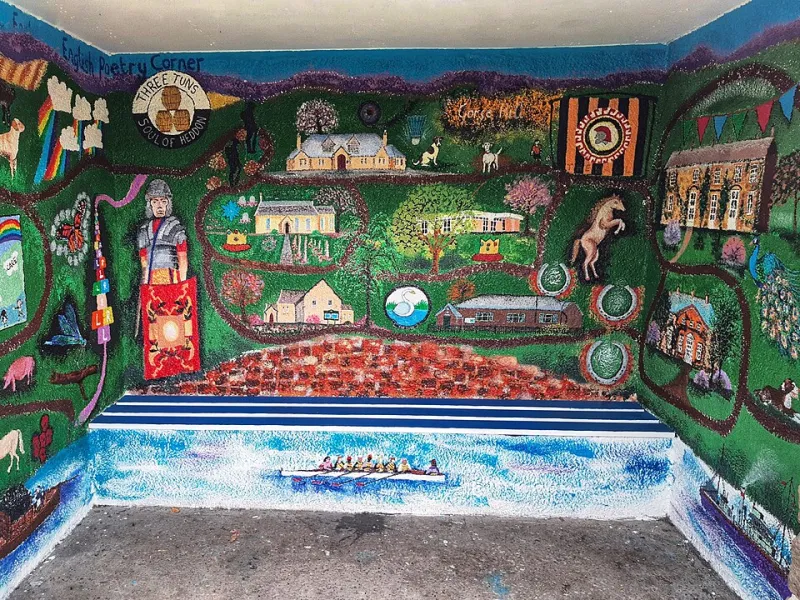
Photo: Andrew Curtis , CC BY-SA 2.0, via Wikimedia Commons
Denise Carter found out her son's face was on a T-shirt from a stranger's Facebook post.
Her son, Marcus, had been missing for eleven days. Volunteers had organized searches, printed flyers, stapled them to telephone poles across the east side of Cleveland. Denise was grateful — genuinely, bone-deep grateful — for every single flyer. What she wasn't prepared for was the merch. Someone she'd never met had put Marcus's senior photo on a T-shirt and was selling it out of a car trunk to raise money for the search.
"I stared at my baby's face on a stranger's chest and I didn't know what I was feeling," she told us. "Gratitude, obviously. He was out there because people cared. But also — that's my son. That photo was taken in my kitchen. Nobody asked."
Denise's story is more common than most Americans realize, and almost nobody talks about it: what happens to a face after it becomes a symbol.
The Lifecycle of a Public Face
It follows a pattern now, the way grief moves through the American internet. A person goes missing, or is killed, or saves a busload of children, or is simply in the wrong place when a camera turns on. Within hours, their face is everywhere — flyers, candlelight vigil graphics, a GoFundMe banner, a mural proposal, a hashtag. The face does work that words can't. It raises money. It keeps searches alive. It makes strangers care.
And almost never was permission given.
Legally, this is murkier than you'd expect. First Amendment protections around newsworthy images and public fundraising are broad, and grieving families rarely have the stomach — or the money — for litigation. Practically, the face belongs to the neighborhood now. It's on the corner store window and the church bulletin and, eventually, if the story is big enough, a billboard on the interstate.
The Mural Math
Consider the mural. Over the past decade, painted portraits of the lost and the loved have become a fixture of American city walls — Philadelphia, Chicago, Houston, Oakland. They're beautiful. They're often genuinely healing. They're also, sometimes, painted over the objections of the family depicted.
A muralist in the Midwest, who asked not to be named because one of his subjects' families disputes his account, described the tension plainly: "The family says no, and the block says yes. And the block usually wins, because the block is who has to walk past that corner every day. I've painted two faces the mothers asked me not to paint. I'd do it again. I also think about them every time I drive by."
There's no clean side to take here, and that's precisely the point. The public face is a negotiation between a family's private grief and a community's public need. The family usually doesn't get a vote, and the community usually doesn't realize a vote was happening.
The Merch Table at the Vigil
Then there's the economy nobody planned. Memorial T-shirts occupy a particular place in American mourning culture — especially in Black and brown communities, where they've been a tradition for decades, a wearable way of saying this person mattered. But the line between commemoration and commerce gets blurry fast when the person printing the shirts isn't the person grieving.
Families describe finding fundraising pages they can't access, merch they can't control, and viral posts using a loved one's photo to promote things they'd never have endorsed. One woman in Atlanta told us her brother's face appeared in a crypto advertisement weeks after his death. She spent four months getting it taken down.
"The internet doesn't check with anybody," she said. "His face was just out there, working jobs he never applied for."
What Families Are Asking For
The families we spoke with weren't asking for the flyers to come down. They weren't asking the murals to be painted over or the vigils to be quieter. Every single one of them said the same thing first: the attention helped. People showed up. Searches continued. Donations came.
What they wanted was simpler and harder: a say.
Some practical norms are emerging from communities that have been through it. Families asking organizers to route all image use through one contact. Vigil organizers asking before printing anything with a face on it. Muralists — the good ones, anyway — knocking on doors before picking up a brush. GoFundMe itself now requires verification from an authorized family member for memorial fundraisers, a policy that came directly from families who got burned.
Denise, for her part, eventually met the man selling the T-shirts. He was nineteen. He'd known Marcus from the rec center. He cried when he realized he'd hurt her.
"We sat on his hood for an hour," she said. "He gave me the leftover shirts — all of them. I wear mine now. That was always the point, right? That his face gets seen, that people remember him. I just wanted to be the one who decided how."
A face, it turns out, can be the most public thing a family owns. The least we can do is ask before we put it to work.