Stranger in the Selfie: Why the Face You Think You Have Isn't the One the World Sees
There's a specific kind of horror that comes with watching yourself on video. Not the horror-movie kind — the other kind. The kind where you tilt your head slightly the wrong way, catch your reflection on a storefront window mid-stride, or see yourself frozen in the background of someone else's Instagram story, and think: That's me?
It happens to almost everyone. And most of us quietly file it away, chalk it up to bad lighting or an unflattering angle, and move on. But what if the disconnect runs deeper than that? What if the face you've been carrying around in your head all these years — the one you've built your entire sense of self around — is, in a very real way, a fiction?
The Mirror Is Lying to You (Kindly)
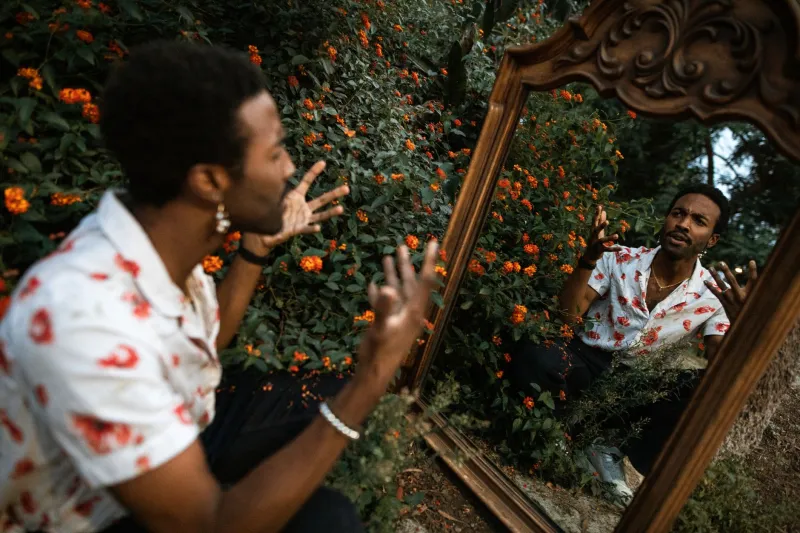
Here's the thing about mirrors: they flip you. Every single day, the reflection you study while brushing your teeth is a laterally reversed version of your face. The mole is on the wrong side. The way your hair falls is backward. The slight asymmetry in your jaw tilts in the opposite direction of what everyone else sees.
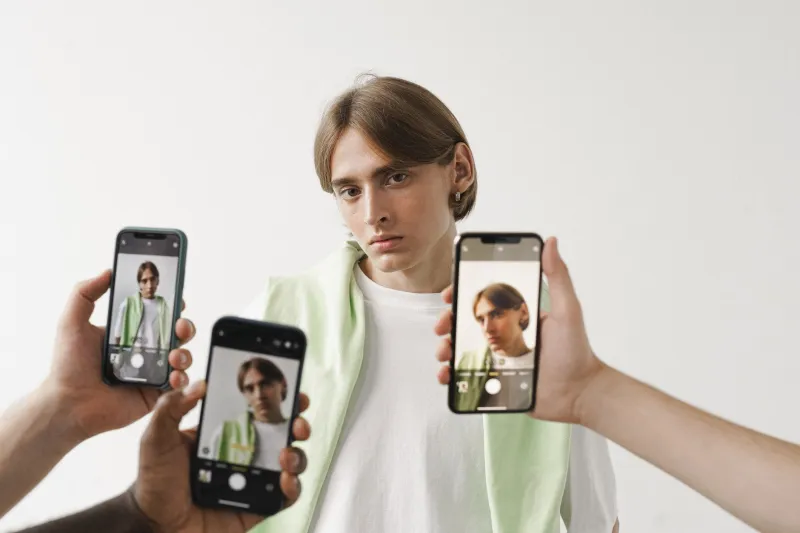
After years of staring at that particular version of yourself, your brain locks it in as you. It becomes the reference point. So when a photo shows up — unflipped, unfiltered, just your actual face the way other people see it — it can feel weirdly foreign. Off. Like meeting a distant cousin who looks almost like you but not quite.
Neuroscientists call this the mere exposure effect. The more you see something, the more familiar and appealing it becomes. Because you've seen your mirror image thousands of times more than anyone else has, you've developed a preference for it. Photos feel wrong because they're showing you the version of your face that you're least familiar with — which happens to be the version everybody else knows best.
"I Didn't Know I Did That With My Face"
Danielle, a 34-year-old teacher from Columbus, Ohio, describes the first time she saw herself on a Zoom recording during remote learning as "genuinely jarring." "I thought I was pretty expressive in a warm way," she says. "But watching the recording back, I looked so serious. Almost stern. I kept waiting for me to smile and I just... didn't as much as I thought I did."
That gap — between the internal experience of your own expression and the external reality of it — is something a lot of people don't expect. We feel our smiles from the inside. We feel warmth, openness, humor. But the muscles doing the work don't always translate that internal experience onto our faces the way we imagine.
Marcus, a 41-year-old from Atlanta who works in sales, had his own version of this reckoning when a colleague showed him security footage from a work event. "I thought I was the guy who's always relaxed and easy to talk to," he says. "But watching myself move through that room, I looked tense. Guarded, almost. I had no idea."
For both Danielle and Marcus, the initial reaction was discomfort. But both describe what followed as something closer to useful.
Why This Gap Actually Matters
The disconnect between our perceived face and our actual face isn't just a quirky psychological footnote. It quietly shapes how we move through the world.
Confidence, for one thing, is deeply tied to how we believe we're being read. If you think you're projecting warmth and approachability, you walk into rooms differently than if you knew you were coming across as closed off. The problem is that the feedback loop most of us rely on — our own internal sense of how we're presenting — is genuinely unreliable.
This matters in job interviews, first dates, family dinners, and difficult conversations. It matters in the doctor's office when you're trying to communicate that you're scared, and in the boardroom when you're trying to project that you're confident. We're all performing a version of ourselves based on a self-image that's been assembled from incomplete data.
Researchers at the University of Chicago found that people consistently rate their own faces as more attractive than objective assessments suggest — not out of arrogance, but because of that same familiarity bias baked in by the mirror. We've been conditioned to prefer our own reflection. And when reality pokes through, it can feel like a small loss.
The Candid Photo as Truth Serum
Ask anyone when they've felt most confronted by their actual appearance, and candid photos come up almost every time. Not the ones you staged and approved, but the ones taken mid-laugh, mid-bite, mid-argument, or mid-zoning-out on the couch.
Those photos are doing something portraits almost never do: they're catching the face in motion, between intentions. And that in-between space is where most of your face actually lives — not in the held smile or the carefully neutral expression you deploy for cameras, but in the micro-moments that stitch together a personality.
Some people find this liberating. Kezia, a 29-year-old photographer based in Brooklyn, says she started asking friends to take candid shots of her specifically because she was tired of only knowing her posed self. "I wanted to see what I actually looked like when I was happy," she says. "Not what I looked like when I was performing happy for a camera."
What she found surprised her — not in a bad way. "I look more like myself than I thought. It's just not the self I was used to."
Making Peace With the Face You Can't Fully See
There's no real fix for this. You will never see your own face the way other people see it — not completely. There's always going to be some degree of translation error between the self you carry internally and the one that shows up in the world.
But maybe that's not the tragedy it initially seems like.
Every face on this planet is being interpreted differently by every pair of eyes that lands on it. The version of you that exists in your best friend's memory is different from the one your coworker holds, which is different from the one your mom sees, which is different again from the one the barista at your regular coffee spot has cataloged over two years of Tuesday mornings.
You are not one fixed image. You never were.
The face you think you're showing is one layer. The face you're actually showing is another. And somewhere in the space between those two versions lives something more honest than either one — a self that's always in the process of being seen, always slightly out of reach, and maybe because of that, always a little more interesting than any mirror could capture.
Every face holds a story worth telling. Even the ones we haven't fully learned to read yet — including our own.