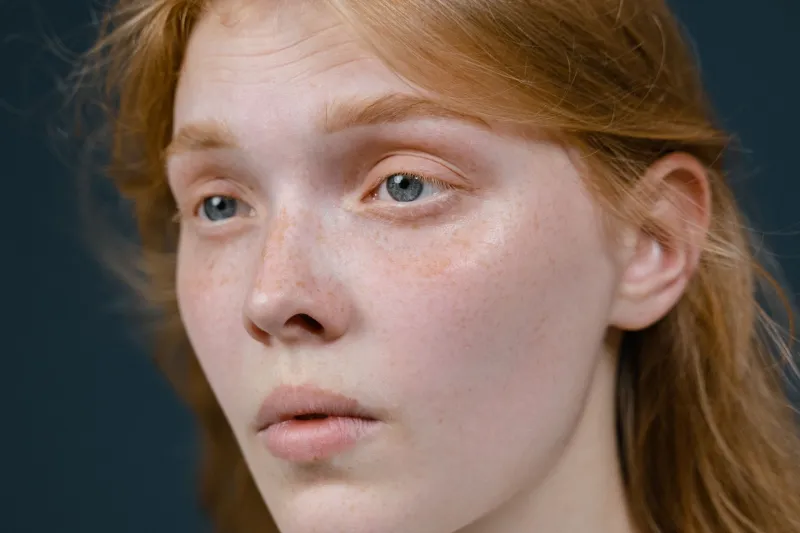
One Person, Three Profiles: The Quiet Identity Crisis Living Inside Your Camera Roll
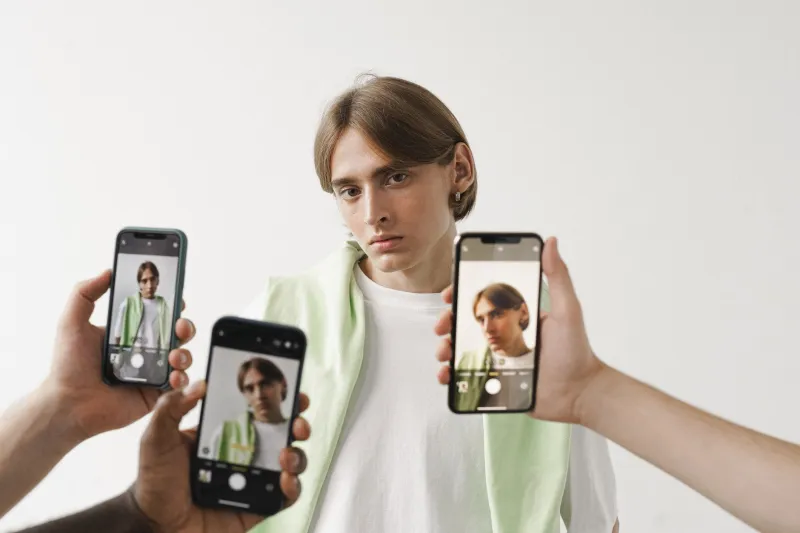
Somewhere on your phone right now, there are at least three versions of you.
There's the one in the blazer, chin slightly lifted, background blurred just enough to look intentional — your professional headshot, the one doing the heavy lifting on LinkedIn. Then there's the one from that golden-hour Saturday, laughing at something off-camera, cropped so your ex is no longer in frame — your dating app photo. And then there's the real one: unposed, unfiltered, maybe mid-chew, sent to your group chat because something about it just felt honest.
Same face. Completely different story.
This isn't vanity. It's not even really about looks. What we're doing when we curate our faces for different platforms is something far more layered — and far more human — than most of us give ourselves credit for.
The Face as a First Draft
Portrait photographer Dani Reyes, who splits her time between Brooklyn and Atlanta, has spent the better part of a decade photographing people for corporate headshots, dating profiles, and personal branding sessions. She's noticed something consistent across all of it.
"The moment I tell someone the photo is for LinkedIn, they change," she says. "Their jaw sets differently. Their eyes go a little flat. They're performing competence instead of just being a person."
That performance, she argues, isn't dishonesty — it's adaptation. "We've always dressed for context. This is just dressing your face."
But the question psychologists are increasingly asking is: what happens when the costuming becomes the costume? When the curated version gets so much airtime that the unposed one starts to feel like the stranger?
Dr. Marcus Tillman, a clinical psychologist based in Chicago who works with clients navigating burnout and identity disruption, calls this "presentational fragmentation." The term sounds clinical, but the experience is anything but.
"People come in and describe feeling like they don't know who they actually are anymore," he says. "And a lot of times, when we trace it back, it started with small performances — the work face, the dating face, the family face — that gradually stopped feeling like performances and started feeling like obligations."
What the Headshot Is Really Saying
Image consultant Priya Okafor works with executives and job seekers across the country, helping them craft visual identities for professional settings. She's blunt about what a headshot actually communicates.
"It's not about whether you look pretty or handsome," she says. "It's about whether you look safe. Trustworthy. Nonthreatening. The whole genre of the professional headshot is built around conformity, not authenticity."
For people of color, women, and anyone who doesn't fit the default corporate mold, that conformity comes at a cost. Okafor works with a lot of clients who describe feeling like they have to "sand down" their features — not literally, but expressively. Less joy. Less personality. More neutral.
"I had a client who was this incredibly warm, expressive Black woman. When she came to me with her existing headshot, she looked like she was testifying in court," Okafor says, laughing. "She'd been told, implicitly, that her natural expressiveness was too much for a corporate photo. So she erased it."
The work Okafor does now is partly technical — lighting, angles, wardrobe — but mostly it's psychological. She tries to help people find a face that's both professionally legible and actually theirs.
"The best headshot isn't the most polished one," she says. "It's the one where someone looks at it and says, 'Yeah, that's me.'"
The Dating App Dilemma
If the LinkedIn photo is about safety, the dating app photo is about desire — and desire, it turns out, is an even more complicated editorial process.
Marco, a 34-year-old teacher in Phoenix, spent an embarrassing amount of time (his words) curating his Hinge profile. "I wanted to look fun but not immature. Attractive but not like I was trying too hard. Outdoorsy but not like I own a Jeep and make it my whole personality."
He's laughing as he says it, but there's something real underneath the joke. The face he was trying to project wasn't fake — it was aspirational. A version of himself he hoped was true, or could be.
"I think that's what people don't get about those photos," says Dr. Tillman. "They're not lies. They're wishes. You're putting forward the self you want to be seen as, which is also the self you're trying to grow into."
The problem, he notes, is when the wish and the reality diverge so sharply that the first date feels like a betrayal — not just to the other person, but to yourself.
The Selfie You Sent Your Best Friend
And then there's that third photo. The unguarded one.
There's a reason we don't post those. Bedhead. Bad lighting. A face mid-laugh that looks nothing like any version of ourselves we'd consciously choose to present. But there's also a reason we take them — and send them to exactly one or two people who've earned the right to see them.
Reyes, the photographer, thinks these are actually the most valuable images most people will ever take of themselves.
"That photo your friend took of you at the kitchen table, where you're not doing anything for the camera — that's your face," she says. "That's the one that's going to matter to the people who love you. Not the headshot."
There's something quietly radical in that idea, especially in a culture that has built an entire economy around the perfected image. The face that doesn't perform anything. The one that just exists.
Finding Your Way Back to Your Own Face
Dr. Tillman works with clients on what he calls "identity consolidation" — the practice of narrowing the gap between the faces we show and the face we actually live in.
It's not about abandoning context entirely. You're still going to dress up for a job interview. You're still going to pick your best angle for a profile photo. That's just life.
"But there should be a thread," he says. "Some continuous thing that runs through all of them that's recognizably, undeniably you. If you can't find that thread anymore, that's worth paying attention to."
Okafor puts it differently, in the way that only someone who stares at faces for a living can.
"Every face tells a story," she says. "The question is whether you're the one writing it, or whether you've handed the pen to everyone else."
Somewhere in your camera roll, between the blazer and the blurred background and the mid-laugh kitchen selfie, there's a face that belongs entirely to you. The work — the real work — is learning to recognize it.
And maybe, eventually, letting other people see it too.