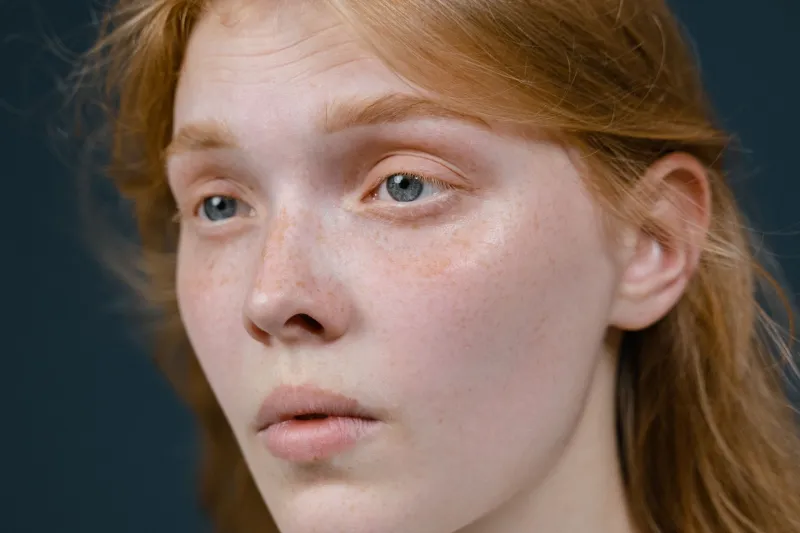
Your Face Is Talking Even When Your Mouth Is Closed — Here's How to Listen

There's a moment that probably sounds familiar. You're in a team meeting, your manager just announced a new initiative, and everyone around the table said some version of "sounds great." But something felt off. Maybe it was the way your colleague's brow pulled inward for half a second before she smiled. Maybe it was the tiny tightening around your director's eyes when he nodded. You couldn't put your finger on it, but your gut was screaming that the room wasn't actually on board.
Your gut wasn't wrong. Your eyes just didn't know what they were seeing yet.
The Science Behind the Split Second
Microexpressions are involuntary facial movements that last between one-fifteenth and one-twenty-fifth of a second. They're the body's emotional receipts — proof of what's actually being felt before the brain has a chance to compose a more socially acceptable response. Psychologist Paul Ekman, who spent decades studying facial expressions across cultures, identified seven universal microexpressions: happiness, sadness, anger, fear, disgust, contempt, and surprise. These aren't culturally learned. They're wired in.
"What makes microexpressions so significant is exactly what makes them so easy to miss," says Dr. Renata Voss, a social psychologist based in Chicago who consults with organizations on nonverbal communication. "They happen faster than conscious thought. By the time your brain registers that you saw something, the expression is already gone. Most people dismiss it as a trick of the light."
But it's not. And in workplaces — where so much communication is filtered through professionalism, hierarchy, and the pressure to perform positivity — microexpressions are often the only honest language being spoken.
What's Actually Happening in Your Office
Let's get specific, because abstract science only gets you so far.
Picture this: You've just presented a project you've been working on for three weeks. Your boss says, "I think this has real potential." But for just a flash — maybe while you were still pulling up your final slide — you caught something. A subtle lip curl. A barely-there eye roll that corrected itself almost instantly. That's contempt. And according to Ekman's research, contempt is one of the most corrosive microexpressions in professional relationships because it signals not just disagreement but a fundamental lack of respect.
Or consider the colleague who always seems enthusiastic in group settings but leaves you feeling vaguely unsettled one-on-one. Look for the Duchenne marker — the involuntary crinkling around the eyes that only happens with genuine smiles. If someone is smiling with their mouth but their eyes are flat, that's what researchers call a "social smile." Polite. Performed. Not felt.
"People think they're better at masking than they actually are," says Marcus Ellery, a licensed therapist in Atlanta who works with executives on emotional intelligence. "The face almost always leaks the truth, even briefly. Learning to notice that isn't about catching people out — it's about understanding what's actually happening in a room."
This Isn't About Surveillance — It's About Connection
Here's where it's worth pausing, because reading microexpressions can sound a little... invasive. Like you're trying to catch people in a lie or get a psychological edge in a negotiation. And sure, that's how it gets used in some corporate training programs, which is honestly a little gross.
But that's not the point — at least not the one worth making.
When you learn to read microexpressions, you're not becoming a human lie detector. You're becoming a better listener. You're learning to respond to the whole person in front of you, not just the words they've been coached, socialized, or pressured to say. That's especially meaningful in workplaces where certain people — women, people of color, introverts, anyone with less institutional power — have learned to mask their real reactions as a survival strategy.
"So much of what we call 'communication breakdown' in organizations is actually an empathy gap," Dr. Voss explains. "People are expressing discomfort, disagreement, or even distress through their faces, and their colleagues and managers are simply not equipped to notice. That has real consequences — for morale, for retention, for psychological safety."
Reading the Room Without a Psychology Degree
You don't need to become a trained researcher to start paying better attention. A few entry points:
Slow down before you respond. Most of us are already formulating our reply while the other person is still talking. If you shift even a fraction of that mental energy toward watching the face in front of you, you'll start catching things you used to miss.
Learn the baseline first. Every face has its own default setting. Some people naturally furrow their brows when they're concentrating — that's not contempt, that's just how they think. Get to know how someone looks when they're relaxed before you start interpreting their expressions under pressure.
Pay attention to mismatches. The most telling moments are when verbal and nonverbal signals don't line up. Someone saying "I'm fine" while their jaw is tight and their eyes are doing something complicated is not fine. That mismatch is where the real conversation is waiting.
Don't assume — ask. Reading a microexpression isn't a conclusion, it's an invitation. If you notice something, follow up. "Hey, I got the sense that landed differently than I expected — is there something you'd want to revisit?" That's not manipulation. That's human decency.
The Face as an Honest Document
There's something almost radical about taking faces seriously in a culture that has spent decades training us to look past them. We've normalized the performance — the LinkedIn headshot smile, the Zoom-call neutrality, the boardroom poker face. We've gotten very good at talking to each other's presentations instead of each other's actual selves.
Microexpressions are a disruption to all of that. They're the part of the face that hasn't gotten the memo, the part that still responds to the world in real time, before the edit.
And if the whole premise of this site is that every face holds a story worth telling, then maybe the most interesting stories are the ones happening in the in-between — in the quarter-second flinch, the almost-smile that didn't quite make it, the flash of something real before the professional mask snaps back into place.
Those expressions aren't embarrassing glitches. They're the most honest thing about us.
Learning to read them — and to respond to what they're actually saying — might be one of the more quietly revolutionary things you do this year.