The Face in the Mirror That Doesn't Match the One Across the Dinner Table
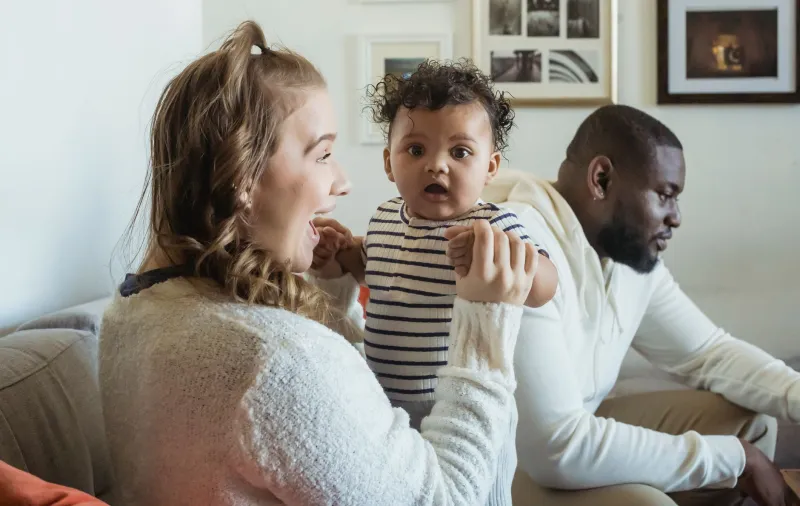
There's a moment a lot of adoptees can pinpoint with uncomfortable precision. Maybe it happens at a school event, when a teacher glances between them and their parents with a look they've learned to read too well. Maybe it's the stranger at a grocery store who says, "She doesn't look a thing like you" to their mom — loud, careless, totally unaware. Or maybe it's just a quiet Tuesday, staring into the bathroom mirror and doing the math that the reflection refuses to solve.
For millions of Americans, the family photo has never been a simple thing.
When the Portrait Doesn't Add Up
America's families have always been more complicated than the stock image version — the matching smiles, the shared cheekbones, the obvious biological thread. But the gap between that image and lived reality has grown more visible, and more openly discussed, than ever before.
According to the Dave Thomas Foundation for Adoption, there are roughly 135,000 adoptions in the United States each year. Add to that the growing number of families built through sperm and egg donation — estimates suggest that between 30,000 and 60,000 donor-conceived children are born annually in the US — and you start to get a picture of just how many people are navigating family without the shorthand of shared genetics.
Then there are multiracial families, blended households, and siblings who simply drew from different ends of the gene pool. The result: a whole generation of Americans who've spent their lives being asked, sometimes gently and sometimes not, to explain their faces.
"People Always Want a Reason"
Marielle, a 29-year-old from outside Atlanta, was adopted from South Korea at four months old by a white family in rural Georgia. She grew up in a town where she was one of maybe three Asian kids in her entire school district. Her parents, she says, were wonderful. The community? A little slower on the uptake.
"People always want a reason," she told us. "Like your face is a puzzle they're entitled to solve. I'd get questions about my 'real' parents before I even knew what that meant. And I'd go home to people who were absolutely my real parents, and feel this weird guilt for even having been asked."
What Marielle describes — that guilt, that split-second disloyalty — is something therapists who work with adoptees hear often. The question where are you really from? does double damage: it implies that the family you have isn't the full story, and it suggests that your face owes people an explanation.
The Donor-Conceived Experience: A Different Kind of Puzzle
For donor-conceived individuals, the experience of not matching can be even more layered — because often, nobody in the room is talking about it.
Devin, 34, grew up in Chicago looking nothing like his dad. Tall, dark-haired, olive-skinned in a family of shorter, fairer people. Nobody said anything for years. It wasn't until a consumer DNA test in his late twenties that the picture sharpened into something he hadn't expected.
"My dad is still my dad," he's clear about that. "But there was this whole part of my biology that had just been... left out of the conversation. And suddenly I'm looking at my own face differently. Asking questions about where certain things came from. It's disorienting in a way that's hard to explain to people who've always just known."
The donor-conceived community has grown significantly more vocal in recent years, pushing for transparency, access to genetic information, and honest conversations within families. Organizations like the US Donor Conceived Council have been amplifying these voices — not to undermine the families that exist, but to acknowledge that identity is more than one thing at a time.
What Belonging Actually Feels Like
Here's the thing that comes up again and again when you talk to people who've lived this: belonging and resemblance are not the same thing, but the world keeps treating them like they are.
Sophia, a 41-year-old from Portland, has three kids — two biological, one adopted from Ethiopia. She watches her kids interact with each other and says the word that comes to mind is unremarkable, in the best possible way. "They fight over the remote. They share inside jokes I don't even understand. They defend each other at school. The fact that one of them looks like me and one doesn't — that's not the story of our family. It's just a fact about our family."
That distinction matters. A fact about a family versus the story of a family. The face in the photo versus the history behind it.
For many adoptees and donor-conceived adults, that reframing has been the work of years — sometimes decades, sometimes therapy, sometimes just the slow accumulation of being loved consistently enough that the mirror stops feeling like a question.
Multiracial Siblings and the Visibility Lottery
There's another version of this story that gets less airtime: siblings from the same two parents who simply look dramatically different from each other. In multiracial families especially, genetics can distribute features unevenly enough that two kids from the same household read as different races to the outside world.
That creates its own complicated terrain. One sibling moves through the world with certain privileges or assumptions attached to their appearance. The other doesn't. Same parents. Same dinner table. Very different daily experiences.
Jamila, 26, and her sister grew up in Houston with a Black father and a white mother. Jamila presents as Black. Her sister has always been read as white. "We've talked about it a lot as adults," Jamila says. "How differently the world has treated us. It's not a wedge between us — if anything, it made us closer because we had to actually talk about race in our house. But it's real. The difference is real."
Rewriting What Family Looks Like
Maybe the most radical thing these families are doing — quietly, without much fanfare — is refusing to let the face be the final word on belonging.
That's not nothing. In a culture that remains obsessed with biological lineage, with ancestry kits and genealogy shows and the idea that your bloodline is your truest story, choosing to define family differently is a genuine act of redefinition.
The faces in these family photos don't match. And somehow, stubbornly, beautifully, that's beside the point.
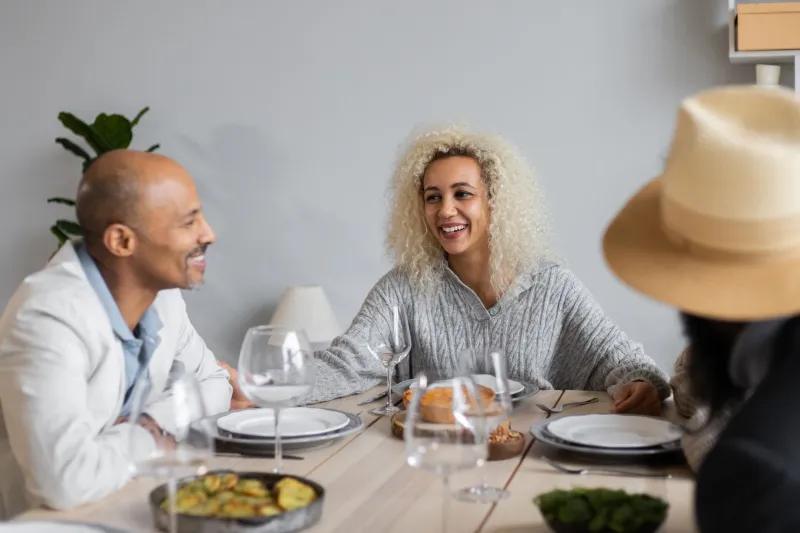
Because what these individuals keep coming back to — Marielle in Georgia, Devin in Chicago, Sophia in Portland, Jamila in Houston — is something simpler and harder to photograph: the feeling of being known. Of being chosen, or of choosing. Of sitting at a table where someone passes you the bread without thinking about it, because of course they do, because you're family.
The mirror might not have the answer. But the dinner table usually does.