Your Face Was Never Supposed to Be Symmetrical — And That's Exactly the Point
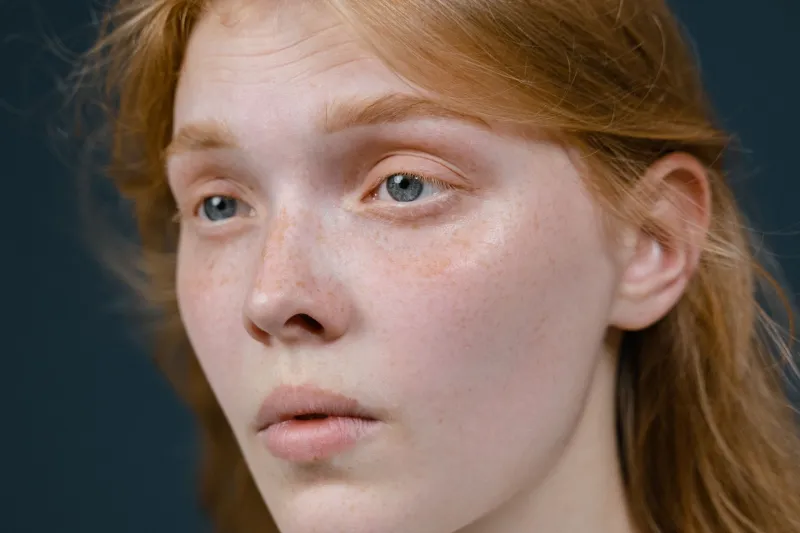
Somewhere between the third filter and the fourth retouching app, a lot of us lost the plot on what a human face is actually supposed to look like. Spoiler: it's crooked. It's uneven. One eye sits a little higher than the other. One cheek holds more fullness. Your nose leans, just slightly, like it's listening to something off to the side. And none of that is a flaw — it's a biography.
The obsession with facial symmetry has been baked into Western beauty culture for centuries, but it hit a fever pitch in the age of smartphones and selfie culture. Apps that "correct" asymmetry. Filters that smooth and balance. Surgeons who use the golden ratio like a blueprint. The message, subtle but relentless, is that an even face is a better face. A perfect face. A more worthy face.
But a growing number of people are pushing back — not with rage, but with something quieter and more lasting: acceptance.
The Mirror Lie We've All Been Told
Here's the thing most people don't realize: the face you see in the mirror every morning is already a flipped version of what the world actually sees. You've spent your whole life looking at your own reflection — a reverse image — and calling it "you." When you see an unedited photo of yourself, the discomfort you feel isn't because you look bad. It's because you look different from the version you've memorized.
That gap — between the mirror self and the camera self — is where a lot of body image anxiety lives. And facial asymmetry sits right in the middle of it.
Dr. studies in perceptual psychology have shown that humans are wired to notice asymmetry but not necessarily to dislike it. We're drawn to faces that feel alive, faces that carry expression and history. Perfect symmetry, when researchers actually render it digitally, tends to read as uncanny — beautiful in a clinical way, but oddly flat. Like looking at a face that's never laughed too hard or cried ugly or squinted through a decade of complicated feelings.
Real People, Real Faces, Real Stories
Marcus, a 34-year-old graphic designer from Atlanta, spent most of his twenties angling his face in photos to hide what he called his "bad side" — the left side, where a childhood accident left a subtle but visible difference in the way his jaw aligned. "I got so good at the three-quarter turn," he laughs. "I had it down to a science. I basically invented my own personal brand of hiding."
The shift came slowly. A friend tagged him in a candid photo — full-frontal, laughing, completely unposed — and the comments weren't what he expected. People kept saying he looked happy. Not despite his face. Just... his face, in the middle of joy. "I realized I'd been so focused on the asymmetry that I forgot there was a whole person attached to it."
That realization — that a face is more than its geometry — is something Priya, a 28-year-old teacher from the Chicago suburbs, has been sitting with for years. Born with a slight ptosis in her left eyelid, she grew up fielding questions ranging from curious to cruel. Doctors offered surgical options. She declined. "My eye is part of how people know it's me," she says. "When I FaceTime my mom, she sees me. Not a symmetry problem. Me."
What the Beauty Industry Gets Wrong
The golden ratio — that mathematical formula beloved by Renaissance artists and modern plastic surgeons alike — positions facial symmetry as the holy grail of attractiveness. And while there's some evolutionary psychology behind why humans respond to symmetry (it can signal developmental health, broadly speaking), the leap from "slightly relevant biological data point" to "standard everyone must meet" is a massive one. One that conveniently generates a lot of revenue.
The American cosmetic surgery industry pulls in tens of billions of dollars annually. A significant chunk of that is driven by people seeking to "correct" features that aren't medically problematic — just uneven. Rhinoplasties to straighten a nose. Brow lifts to raise a lower-set eye. Fillers to balance cheek volume. None of these are inherently wrong choices. But the why behind them matters enormously.
Are people making those choices from a place of genuine desire, or from years of being told their natural face is a rough draft?
Asymmetry as Authorship
Portrait photographers have known something for a long time that the beauty industry doesn't want to advertise: asymmetry is interesting. It's what makes a face readable. It's the record of every expression that ever moved across someone's features — the smiles that pulled harder on one side, the squints from years of afternoon sun, the way grief or laughter or chronic stress writes itself differently on each half of a face.
Your face is not a logo. It's not supposed to be balanced and reproducible and brand-consistent. It's a living document.
Jordan, a non-binary photographer based in Brooklyn who shoots exclusively unretouched portraiture, puts it plainly: "When I look through my lens, the 'imperfections' are always the most compelling part. The slight droop, the uneven brow, the scar that changed the whole topography of someone's face — that's where the story is. Symmetry is forgettable. Character isn't."
Learning to Read Yourself Differently
For a lot of people, making peace with an asymmetrical face isn't a single moment. It's a practice — like any other form of self-acceptance that runs against the cultural current.
Some find it through portraiture, sitting for photos that aren't filtered or posed, learning to see their own face the way a stranger might: with curiosity instead of critique. Others find it through community — online spaces where people share unedited images and the conversations that follow are less about "fixing" and more about recognizing.
What nearly everyone who's arrived at that place of acceptance says is some version of the same thing: the asymmetry didn't disappear. They just stopped treating it like a problem to be solved and started treating it like a feature of a face that belongs to them.
The Faces Worth Seeing
At Faces of Yve, the whole premise is that every face holds a story worth telling. Not the faces that fit a template. Not the ones that photograph cleanly from every angle. The ones that are lived-in and specific and real.
Your uneven face — the one that tilts slightly in photos, the one you've been hiding or apologizing for or planning to fix — is not a face in progress. It's already a face. It's already yours.
And honestly? That's the most interesting version of you there is.