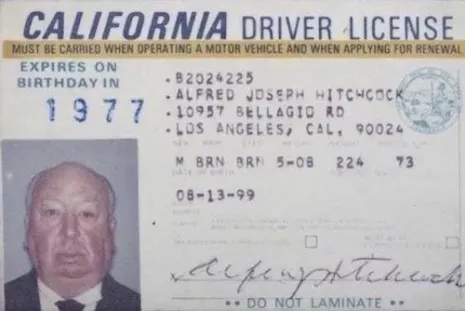
Proof of Adulthood: What Baby-Faced Americans Pay for a Compliment They Never Asked For

Photo: Smart Mark Greene at en.wikipedia, Public domain, via Wikimedia Commons
The bouncer at a Nashville honky-tonk looked at Dana Whitfield's license, then at her face, then back at the license. She was 34. He raised one finger, waved a coworker over, and asked — loud enough for the whole line to hear — "Does this look real to you?"
Dana is a physical therapist. She has two kids, a mortgage, and a very specific kind of tired. "I've carried three forms of ID since I was 22," she says. "Passport, work badge, and a photocopy of my birth certificate in the glove box. Not because I'm disorganized. Because I got tired of being called a liar at the door."
That's the thing about a baby face. The world hands it to you as a gift and then charges you for it — quietly, in small increments, for decades.
The compliment with a question mark attached
In this country, looking young is supposed to be the prize at the end of the skincare aisle. We spend serious money chasing what some people showed up with. So when someone says, "You look so young!" they usually mean it kindly.
But listen to what comes right after it. Can I see a second ID? Are you the parent or the babysitter? How old are you, really? Youthfulness is the rare American compliment that arrives with an interrogation attached, and the person receiving it is expected to smile through the cross-examination.
The credibility tax
Ask people who live with this face what it actually costs, and the answers cluster around work.
Marcus Ibe, 36, is a project manager in Atlanta who has been mistaken for the intern at three separate jobs. "I learned to stop wearing hoodies to client meetings," he says. "Not because I wanted to. Because I got tired of watching people's eyes slide past me to whoever looked older in the room."
It's not vanity to want that fixed. Decades of research on first impressions point the same direction: people make snap judgments about competence from a face before a single word is spoken, and a softer, rounder, younger-looking face tends to get filed under inexperienced. Which means some workers spend the first five minutes of every meeting climbing out of a hole they didn't dig.
So they adapt. Blazers in July. Glasses with frames. Haircuts that read "supervisor." A studied way of announcing credentials early, before anyone can guess wrong.
The hospital room problem
Outside the office, the misreads get less funny. Several people described being asked, in waiting rooms and ER bays, whose family member they were there for — while standing there as the patient. One woman in Oregon said a nurse handed her clipboard to her husband, assuming he was the one making medical decisions.
"I was the one with the referral," she said. "I was the one in pain. But the room decided I was the daughter."
That's where a youthful face stops being a party trick and becomes something closer to a safety issue. Credibility isn't just about promotions. It's about being believed when you describe your own body.
Parent-teacher conference energy
Then there's the school parking lot. Parents who read young describe being asked if they're the nanny, the older sibling, or — a favorite — "the sitter." One mom in Phoenix started bringing her ID to conferences after a teacher directed a question about her son's reading level to her mother-in-law instead of her.
She laughed about it. Then she didn't. "It's funny exactly once," she said. "After that it's a system telling you who it thinks you are."
What the fix actually looks like
Here's the part that rarely makes it into the "you'll love it when you're 50" pep talk: the burden shouldn't be on the person with the young face to look older. It should be on institutions to stop using appearance as a substitute for proof.
Read the ID. Check the badge. Ask who the patient is instead of guessing. Believe the person in front of you the first time.
And when someone says they'd like to be taken seriously, don't answer with a compliment about their skin. That's not the conversation they're having.
The long game, and why it's a dodge
People love to promise baby-faced adults that they'll be grateful later — that the 55-year-old version of them will cash in every awkward ID check as a dividend. Maybe. Probably, even.
But the 35-year-old still needs to be heard now. The face that got you carded at 35 isn't a problem to be waited out. It's a face doing its job, attached to a person asking, reasonably, to be seen at the age they actually are.
Every face holds a story worth telling — including the one the world keeps reading at the wrong age.