Sorry, You're Not Who I Think You Are: Life as America's Accidental Body Double

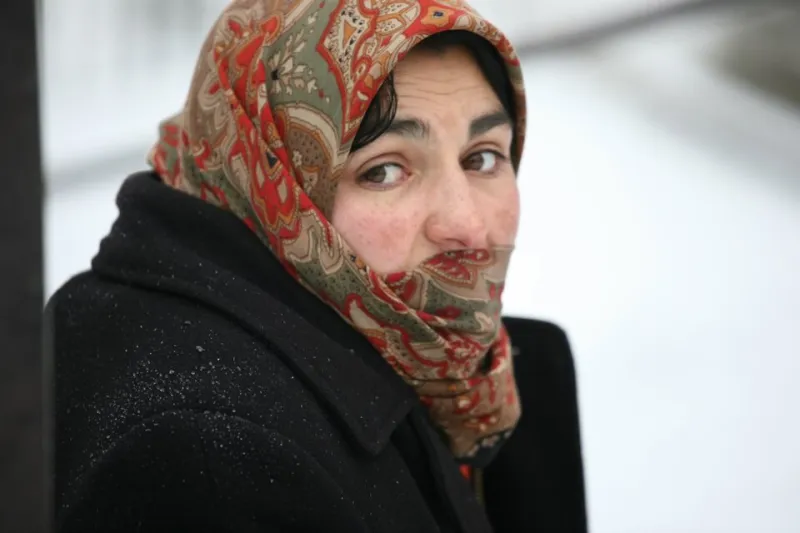
Photo: Snapshots Of The Past, CC BY-SA 2.0, via Wikimedia Commons
The first time it happened, Maria Delgado was buying cough syrup at a Walgreens in San Antonio. The cashier squinted at her, grinned, and said, "No way — you're the lady from the shampoo commercial."
Maria is not the lady from the shampoo commercial. She is a 43-year-old dental hygienist who has never been on television in her life. But she has been mistaken for the actress — whose name she now knows better than her own dentist's — roughly two hundred times since 2016.
"At first it's funny," Maria told us over coffee. "Then it's every single week. Then a woman asked me to sign a receipt and I almost did it. That's when it got weird. That's when I started wondering who exactly I was signing for."
The Face You Didn't Choose, Doing Overtime
There is no census of doppelgängers. No registry, no licensing board, no support group — well, almost no support group, but we'll get to that. And yet nearly everyone we spoke with for this piece had a version of Maria's story: a coworker's name they answer to, a celebrity they've been dodging at Whole Foods for a decade, a cousin's friend so identical that family photos require captions.
Researchers who study face recognition estimate that each of us has somewhere in the range of several dozen "doppel twins" walking around the planet at any given time. In a country of 340 million people, that math stops being a fun fact and starts being a lifestyle. Facial recognition-powered photo apps have only raised the stakes. People are now getting tagged in strangers' wedding albums. One man in Ohio told us his phone's photo grouping feature created a folder of "him" that was, on close inspection, mostly a real estate agent from Tampa.
"I've never met the guy," he said. "But my phone loves him. My phone thinks he's me more than I do."
Hello, Not-Me
What surprises people most isn't the resemblance itself. It's the identity bleed that follows.
When strangers greet you with someone else's name — a barista who's decided you're "Amanda," a neighbor who waves like you're "Mr. Patterson" — you have two options. Correct them, every time, forever. Or, occasionally, just... be Amanda. Be Mr. Patterson. Accept the coffee, return the wave, keep it moving.
"There's this tiny moral negotiation that happens in half a second," said Priya, a schoolteacher in Sacramento who has been mistaken for three different people at her own school, including a substitute she has never met. "Do I ruin this person's day to protect the integrity of my face? Sometimes I just let it ride. And then I feel like I've cheated on myself a little."
Psychologists have a loose handle on this: our sense of self is partly relational, built from how others respond to us. When the responses are addressed to the wrong person often enough, the edges get soft. Maria says she sometimes catches herself smiling the shampoo actress's smile — the one from the commercial, the one strangers expect — before remembering she has her own.
"It's like wearing someone's coat," she said. "It fits. It's just not yours, and you know it."
The Lookalike Internet Is Weirdly Wholesome
Here's where the story turns. Because the same platforms that make mistaken identity inescapable have also turned accidental resemblance into genuine community.
Facebook groups with names like "Doppelgängers Unite" and "You Look Like Someone" now boast hundreds of thousands of members who post side-by-side photos, celebrate their uncanny matches, and — this is the part nobody expects — sometimes meet in person. There are lookalike conventions, doppelgänger photo shoots, even a small industry of professional doubles who get paid to attend events as a celebrity's stand-in. (The pay is better than you'd think. The craft-services situation is not.)
Last fall, Maria's friends tracked down her shampoo twin on Instagram and, without asking, sent her photos. The actress — who has apparently heard "you look like a dental hygienist in Texas" her whole life too — direct-messaged Maria directly. They video chatted for an hour. They compared hands, of all things, because a stranger once told Maria her hands were the real giveaway.
"She gets it," Maria said. "Nobody else gets it. My husband thinks I'm being dramatic. She was like, 'No, tell him it's a lot.' It's the strangest friendship I've ever had and I'd fight somebody over it."
The Face Is the Same. The Story Isn't.
Spend enough time among accidental twins and one theme keeps surfacing: resemblance is the surface, never the substance. Two people can share a bone structure and nothing else. The lookalike communities understand this better than anyone — they've had their faces borrowed by the world, and they've learned that a face tells you almost nothing about the person wearing it.
That might be the real lesson hiding inside this strange phenomenon. We spend so much energy worrying that our faces are our identity — that a photo, a resemblance, a recognition algorithm could capture who we are. But Maria's story, and Priya's, and the Ohio man whose phone loves a stranger, all point the other way. You can hand someone your exact face and they still won't be you.
The face is the business card. The person is everything it leaves off.
Maria still gets recognized weekly. She's made peace with it, mostly. She has one rule now, though, and she shared it like advice she wishes she'd gotten sooner:
"Be flattered, be friendly, but never sign the receipt. You don't know whose life you're autographing."