You Can Spot a Dairy Farmer at Fifty Feet: In Praise of America's Regional Faces
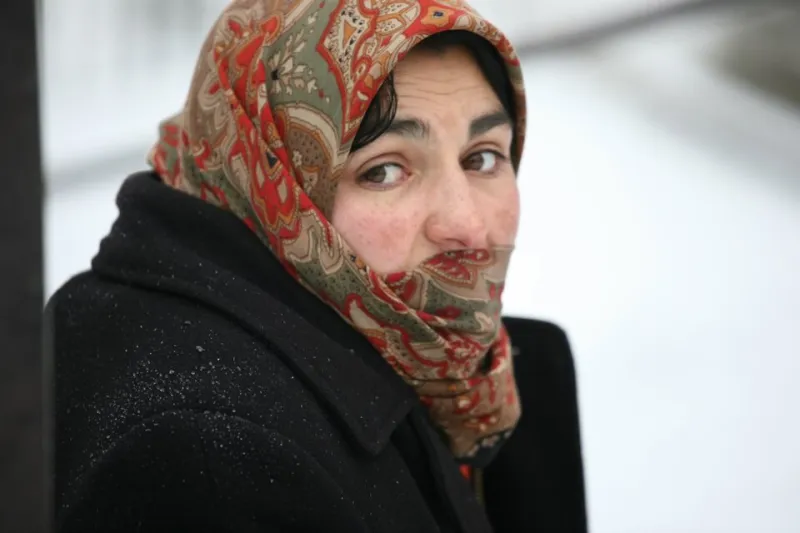
Photo: Alex Proimos from Sydney, Australia, CC BY 2.0, via Wikimedia Commons
My grandmother could look at a stranger in the grocery store and tell you, with unsettling accuracy, what they did for a living, where their people were from, and roughly how many winters they'd spent there. She wasn't psychic. She was from a town of 800 people in eastern Colorado, and like a lot of folks from towns that size, she'd learned to read faces the way sailors read weather.
She'd clock the windburn. The squint that never fully un-squints. The pale strip under the hat brim. "Dairy," she'd say, and she was never wrong.
We don't talk much about regional faces in America, but we should, because they're real, they're specific, and they're quietly disappearing.
The Face Is a Map
Start with the sun, because everything starts with the sun. Faces are shaped by light the way dialects are shaped by isolation. The farmer's squint of the Central Valley. The wind-flushed cheeks of the Texas Panhandle, where the wind does half the weathering and the sun does the rest. The deep, even tan of a Florida crabber, interrupted only by the raccoon mask of polarized sunglasses worn eleven months a year.
Then there's the occupational layer, stacked on top like sediment. Rodeo people have a look — the hat line across the forehead, the sun-scoured lower face, a certain set to the jaw that comes from a lifetime of getting thrown off things and getting back on. Commercial fishermen out of Gloucester carry decades of salt spray in their skin. Welders, if they're careless with the hood, wear their arc flash like a badge. Ski bums in Bozeman have goggle tans in July. Line cooks have forearm burns and a hollow-eyed patience that reads instantly to anyone who's ever worked a Saturday double.
None of this is a stereotype in the mean sense. It's more like weather damage as autobiography. The face keeps a record of where a life was lived, and in small communities, everyone knows how to read it.
Home Court Advantage
Here's the strange part: these looks are hyper-legible at home and meaningless a few hundred miles away.
A waitress in Marfa, Texas, can spot a rancher's daughter from three tables off — the posture, the squint, the particular absence of fuss — but put that same rancher's daughter in a Starbucks in Chicago and she's just a woman waiting for a latte. The face speaks a dialect, and dialects only work where people know the language.
This is why going home feels different on your skin. You drive back into your county and suddenly you're legible again. The cashier at the co-op reads your face and knows your cousin. The face that meant nothing in the city is suddenly fluent again. Small-town Americans describe this as being "recognized" rather than "seen," and the distinction matters. Recognition implies history. It implies the face has a file.
The Flattening
Which brings us to the uncomfortable part. The same face, filtered and ring-lit and optimized for a feed, is starting to look the same everywhere.
You've seen it — the Instagram face, the trending nose, the lip shape that shows up from Miami to Minneapolis. Facetune doesn't know about feed caps or sunburn or squint lines; it sands them off as flaws. And the beauty standard it sands toward is a face with no zip code at all. Smooth, symmetrical, evenly lit, regionless. A face you could see anywhere, which means a face that's from nowhere.
Something gets lost in that flattening, and it's worth naming: when the weathered look gets edited out, the geography gets edited out with it. The squint that says High Plains. The tan lines that say deckhand. The forehead line that says thirty years of a cap in the hayfield. These aren't imperfections. They're provenance.
There's a reason the most beloved faces in any small town are never the smoothest ones. They're the ones with the most story per square inch.
Read It Before It's Gone
Nobody's asking you to romanticize sun damage — dermatologists in particular would like a word. Wear the sunscreen. But maybe before the next filter smooths another weatherline into oblivion, consider what it was keeping a record of.
Somewhere in your town there's a face that could only have been made there — shaped by that wind, that light, that work, that water tower's worth of local history. It reads instantly to the people at the feed store and means nothing to anyone a state over.
That's not a flaw in the design. That's the whole point. Faces are the last dialect most of us still speak, even if we don't know we're speaking it.
My grandmother, for the record, would have read the Instagram face in about two seconds. Her verdict, delivered over a cart of canned peaches: "Looks like she's never been outside a day in her life." Then, after a pause, not unkindly: "Somebody should take her to the coast."
Somebody should. Faces could use the weather.