The Photo You Never Chose: What Your Driver's License Says About the Face You Actually Have
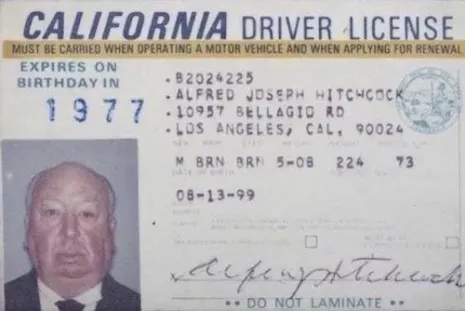
Photo: Californian DMV., Public domain, via Wikimedia Commons
There is a particular kind of silence that settles over the DMV photo line. It is not the silence of patience. It is the silence of a room full of people mentally rehearsing their own faces. Should I smile? No. Chin up? Maybe. Is my hair doing the thing? The camera operator has seen ten thousand of us and will see ten thousand more before lunch. We step up, stare at the red dot, and get reduced to a rectangle.
That rectangle is the most honest portrait most Americans will ever own. It is also the one we hate most.
The Anti-Selfie
We live in an age of the curated face. We know our good side. We know the angle that makes our jaw look sharper and the light that makes our eyes look awake. We have taken forty-seven selfies to post one. Then we walk into a government building, sit on a stool under fluorescent lights that seem designed to reveal every secret our skin has ever kept, and let a stranger take the least flattering photo of the decade.
The DMV portrait is the anti-selfie. There is no ring light. There is no redo because the vibe is off. There is no caption that says, lol I look so tired. There is just the face you make when you are trying not to make a face.
And that is what makes it weirdly honest. The selfie is a story we tell about ourselves. The ID photo is a document someone else keeps. It catches the face that shows up for paperwork, for travel, for voting, for picking up a prescription, for proving you are who you say you are. It is not the face you chose. It is the face that kept showing up.
The Face After the Before
People navigate ID photos around major life changes in ways that are quietly tender. A new haircut. A transition. A significant weight change. A divorce. A name change. Grief. Illness. Immigration paperwork. The photo is a time capsule you did not ask to carry.
Some people time their DMV visit around a new chapter. They want the license to match the person they are becoming. Others dread the renewal because it means replacing a face that still feels true. I have friends who kept an old license in a drawer long after it expired, not because they needed it, but because the photo on it looked like someone they missed.
There is also the passport photo, which is its own flavor of exposure. You cannot smile. You cannot wear glasses in some cases. You cannot let your hair cover your face. The government asks for a neutral expression, and most of us discover that our neutral expression looks like we have just been told the Wi-Fi is down for the rest of the week.
For some Americans, the official portrait is not funny at all. It is proof of a status, a wait, a fight, a name that had to be explained, a face that had to be verified. The rectangle is small, but the stakes are not.
Why We Hate It (And Why It Matters)
We hate the DMV photo because it feels more exposing than a selfie. A selfie is a performance. An ID photo is a receipt. It says: this is the face the state has on file. This is the face that will be compared to you at the airport, at the bank, at the polling place. There is no angle to hide behind.
But there is also something democratic about it. Everyone's ID photo is bad. In a country obsessed with polish, the DMV is a rare room where nobody is winning. The teenager with the perfect Instagram grid has a license photo that looks like a mug shot from a mild crime. The CEO does too. The fluorescent lights do not care about your personal brand.
That shared humiliation is a strange kind of belonging. We all have a rectangle we would rather not show anyone. We all know the small panic of handing over an ID and watching the other person glance from the photo to your face and back. We all hope they see enough of a match to move things along.
The Rectangle We All Share
The next time you hate your official portrait, remember what it is actually doing. It is not trying to capture your best angle. It is trying to answer a boring, necessary question: are you you? And the answer, most of the time, is yes — tired, unphotogenic, chin slightly too high, but yes.
The face in the rectangle is not the whole face. It is not the face you make when you laugh, or the face your friends know, or the face you see in the good mirror at the hotel. But it is a face that belongs to you. It is the face that showed up. In a country full of curated images, that is a kind of honesty worth keeping.