Growing Up Inside the Sign: The Kids Whose Family Business Put a Face Above the Door
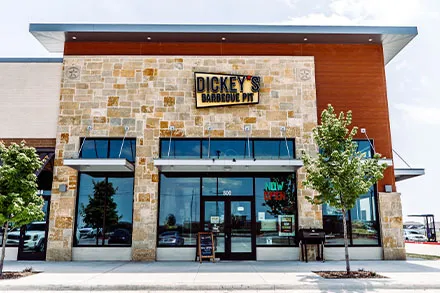
Photo: Rjacob521, CC BY-SA 4.0, via Wikimedia Commons
Ask anyone in Hamtramck, Michigan, how to find the bakery and they won't give you a street name. They'll say: Look for the lady with the round cheeks and the babka.
The lady is Helen Nowak. She opened the place in 1968, died in 2011, and is still on the awning over Joseph Campau Avenue — squinting cheerfully through sun and sleet, printed on every cake box, watching the intersection like she's still deciding whether to unlock the door.
Her grandson Peter Nowak, 38, runs the ovens now. He has her cheeks. Strangers tell him so, usually while holding a paper number and waiting for a crumb cake.
"People meet me and immediately say I look like the sign," he says. "Which means they've been looking at my grandmother's face my whole life without knowing it was her."
When a private face becomes public infrastructure
A family portrait is a private object. A logo is a landmark. When a small business presses a relative's face into signage, the relative stops being only a relative — they become a wayfinding tool, a mascot, a thing people point at. Directions get reorganized around them. Children grow up hearing adults say meet you by the lady's chin.
That's a strange inheritance, and a surprisingly common one in this country, where so much of the economy runs on somebody's yiayia, abuelo, or granddad beaming off a storefront.
The kid who is also a landmark
For the second generation, being the face's descendant is a social fact long before it's a business fact.
Anjali Raman, 29, grew up in Edison, New Jersey, where her family's dosa spot has carried her grandmother's portrait since 1994. Classmates found out who she was in elementary school. "Kids would go, 'Oh, you're the grandma restaurant,'" she says. "Not the restaurant. The grandma restaurant. My nani was a celebrity in a town she never once posted in."
The perks are real: free recognition, instant trust, a head start with regulars who feel like they know you. The costs are subtler. You are compared to a face that never ages, never talks back, and never has a bad day. You can't compete with a logo, and you're not supposed to want to.
The comparison economy
Then there's the running commentary. Every family that uses a founder's face describes a version of it — the customers who study your jawline, declare which features you got, and mourn the ones you didn't.
In Lockhart, Texas, the pitmaster whose grandfather glares off a barbecue sign says he's been told he has "the wrong nose for the family business" more than once, always cheerfully, always by someone ordering brisket. "It's meant as a warm thing," he says. "And it is a warm thing. It's also a stranger assigning me my family tree at the register."
Redraw, retire, or leave it alone
Sooner or later, the next generation faces a design meeting nobody wanted.
A 2019 refresh at a bakery in the Midwest — new fonts, brighter palette, a slightly friendlier version of the founder's face — produced online petitions and one very pointed letter to the local paper. A distillery in Kentucky quietly retired its grandfather illustration and took a hit for it. A taqueria in San Antonio redrew its matriarch to look more like the family that actually runs the place now, which felt less like erasure and more like an update.
"We didn't want to sell a nostalgia we couldn't back up," says one of the owners. "We wanted the sign to look like the people who show up at 6 a.m."
There's also paperwork. A face on a logo is an asset with a trademark, sometimes an estate, occasionally a licensing deal and a family argument about who owns grandma's likeness. Nobody explains this at the funeral.
The faces underneath the face
The families who navigate it well tend to do the same thing: they tell the story out loud. They put the founder's name on the menu. They explain the photo. They let the sign be a portrait of a person rather than a brand asset with a pulse.
Peter Nowak keeps a small framed picture of Helen in the kitchen — not the stylized logo version, the real one, with her hair coming loose and her expression caught mid-sentence.
"The sign is for the customers," he says. "That one's for me. She's a person in there. She's not an awning."
Every face holds a story worth telling — even the ones painted above a door, feeding a neighborhood, three generations deep.