The Faces We Keep Without Trying: A Love Letter to Strangers Who Stay
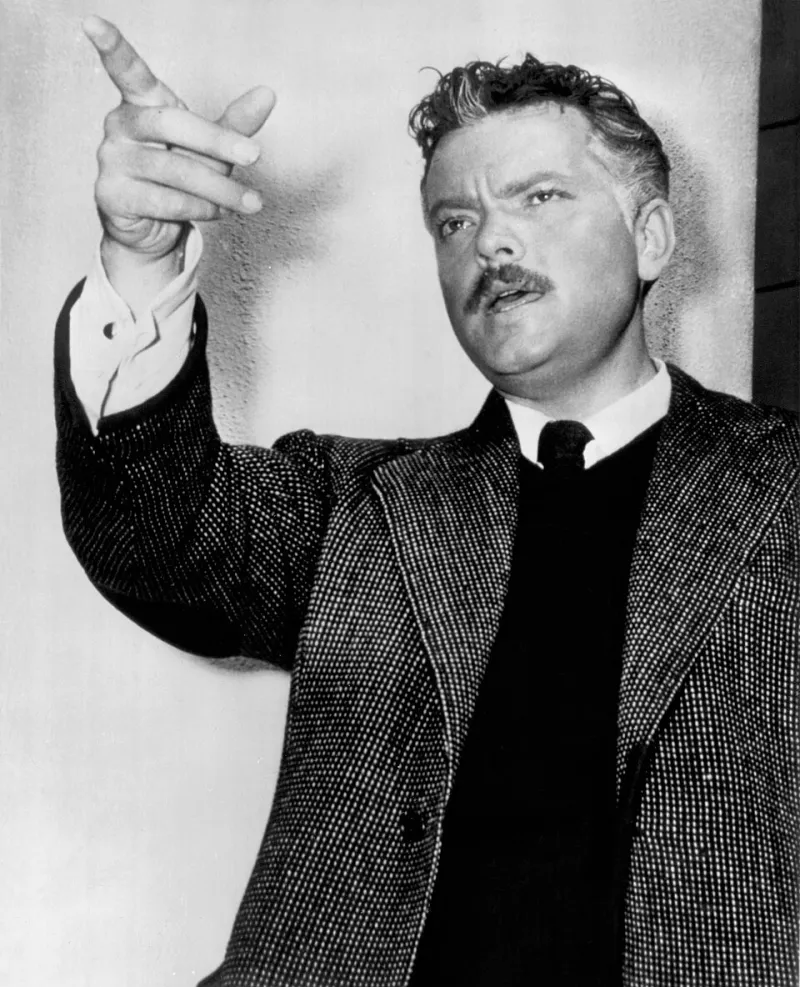
Photo: Associated Press, Public domain, via Wikimedia Commons
I still think about a woman I saw on the bus in Chicago years ago. She was maybe sixty, maybe older, wearing a red coat and holding a grocery bag like it contained something fragile. She was not doing anything dramatic. She was just looking out the window with an expression I could not name. I got off three stops later. I never saw her again. And yet, every so often, her face comes back to me.
That is the strange arithmetic of public life. We pass thousands of faces a week. Most of them dissolve before we reach the next block. A few stay. We do not choose them. We do not know their names. We carry them anyway.
The Woman on the Bus
I used to think this was just a writer thing — a bad habit of turning strangers into characters. But the more I ask people, the more I realize it is not rare. A friend remembers a man in a hospital waiting room, still in his work boots, holding a coffee he never drank. Another remembers a kid at a county fair who dropped his ice cream and looked around first to see if anyone had noticed. Someone else remembers a woman at a laundromat, folding a tiny shirt with unbearable care.
These are not viral moments. They are not stories we tell at parties. They are small, private archives. We keep them the way we keep a receipt in a coat pocket — not because we need it, but because it was there when something in us shifted.
Why Some Faces Stay
Psychology offers a few clues. Faces are special to the human brain. We are wired to read them — for safety, for belonging, for cues about what comes next. A face that carries emotion, even quietly, can get flagged as important. A face that reminds us of someone we love, or someone we lost, can stick. A face that appears in a moment of heightened feeling — fear, grief, boredom, hope — can get filed away with the feeling attached.
There is also the matter of attention. We think we are looking at our phones, but our brains are still scanning the room. When something breaks the pattern — a red coat, a steady stare, a person who seems out of place in a way that is not threatening but tender — we notice. And noticing is the first step toward remembering.
But psychology only goes so far. The deeper answer is simpler: some faces ask something of us without saying a word. They remind us that everyone is living a life as vivid and complicated as our own. That is not a small thing in a country that often feels like it is sorting us into strangers and threats.
The Stranger as Mirror
The faces I remember are not always beautiful in the conventional sense. They are expressive. They are specific. They are not trying to be seen. Maybe that is the point. In a culture of performance, the unguarded face is a kind of gift. It is a moment when someone forgets to curate themselves, and we get to witness it.
I remember a man in a green cap at a bus stop in Seattle, laughing at something on his phone with his whole face. I remember a teenage girl in a doctor's office, braiding and unbraiding a piece of her hair while her mother filled out forms. I remember a county fair vendor, sunburned and tired, who winked at a crying toddler and somehow fixed the whole afternoon.
None of them knew I was watching. None of them would remember me. That asymmetry is part of what makes the memory feel sacred. I was not collecting them. I was just there. They were just there. For a second, the invisible web of public life held.
A Public Life Made of Glances
We talk a lot about community as something we build — block parties, volunteer shifts, neighborhood groups. All of that matters. But there is also a quieter community made of glances. The nod to the person waiting with you at the pharmacy. The shared eye roll when the train stalls. The face you remember from the bus because it looked like it had a story you would never get to read.
We do not need to know every stranger. We do not need to turn every passing face into a lesson. But there is something humane in admitting that we are affected by each other. That the woman in the red coat mattered to me, even though I never learned her name. That the man in the waiting room is still somewhere in my friend's memory, still holding that coffee.
We carry these faces because they remind us that we are not the only ones here. That is not nostalgia. It is evidence. The stranger whose face you still remember is proof that public life is not just traffic and transactions. It is a long, unplanned exchange of presence. And sometimes, without either of us trying, it stays.