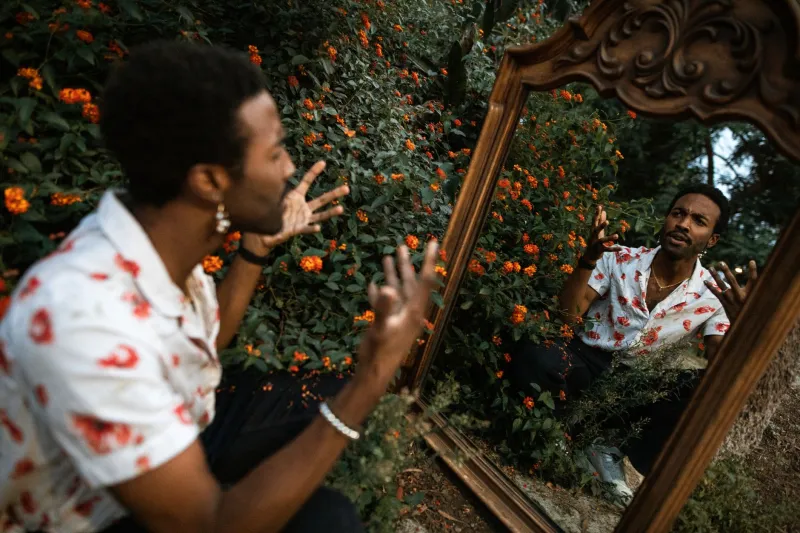
The Voice You Packed and the One You Left Behind
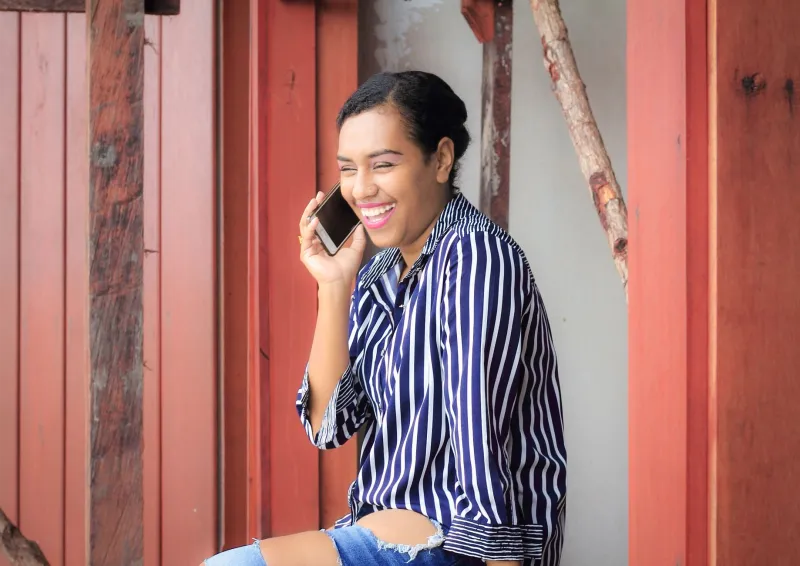
There's a moment Deja Williams knows well. She's on the phone with her mom in Birmingham, Alabama, and somewhere in the middle of the conversation, her voice drops back into something warm and unhurried — vowels stretching out, rhythm slowing down like a screen door swinging shut on a summer afternoon. Then she hangs up, walks back into her Chicago office, and her voice snaps back into something sharper, faster, more clipped. She doesn't plan it. It just happens.
"I used to feel embarrassed about it," she says. "Like I was being fake in one direction or the other. Now I think I was just being human."
Deja's experience has a name — code-switching — but the label barely scratches the surface of what's actually going on. Because this isn't just about swapping slang or adjusting vocabulary. It's about the invisible geography that lives inside your mouth. Every region you've called home, every social world you've moved through, every version of yourself you've had to become — all of it leaves a mark on how you sound. And for millions of Americans, managing those marks is a daily, largely unspoken act of identity negotiation.
The Map You Didn't Know You Were Making
Linguists have long understood that speech is one of the most honest things about us — more honest, in some ways, than anything we consciously say. We absorb accents and speech patterns the way we absorb everything else about a place: without trying, without realizing, until one day someone from back home raises an eyebrow and says, You sound different.
For Marcus Chen, who grew up in Flushing, Queens, and moved to rural Georgia for graduate school, that moment came six months into his program. He'd been unconsciously picking up Southern cadences — not performing them, just absorbing them — and when he called his cousin back in New York, she burst out laughing. "She said I sounded like I was doing a bad impression of someone from a movie," he recalls, grinning. "But I wasn't doing anything. It was just happening."
What Marcus experienced is sometimes called dialect accommodation — the unconscious tendency humans have to mirror the speech patterns of the people around them. It's a social bonding mechanism, deeply wired. The problem is that when you move between worlds, you can end up with a voice that doesn't feel entirely native to any of them.
What It Costs to Sound Like Someone Else
Not everyone experiences this as neutral. For many Americans — particularly those from working-class backgrounds, immigrant families, or communities where regional accents carry social stigma — deliberately altering your voice isn't a quirk. It's a survival strategy.
Rosa Delgado grew up in South Texas speaking a fluid mix of Spanish and English, her accent a natural product of the borderlands. When she got a corporate job in Austin in her mid-twenties, she spent months quietly training herself to sound less from there. "I watched YouTube videos," she says, without a trace of apology. "I practiced in my car. I wanted people to take me seriously before they even looked at my resume."
She got the job. She got promoted. She also spent years feeling like she'd quietly betrayed something — not just her hometown, but her family, the particular music of the way her grandmother spoke. "There's a grief to it that nobody talks about," Rosa says. "You gain access to things, sure. But you also lose a version of yourself that you can't always get back."
This is the part of linguistic code-switching that rarely makes it into the academic literature: the emotional weight of it. The way it can feel like a small, daily erasure. The way some people carry their original voice like a secret — something they pull out only at home, only around people who already know them, only when they're sure it's safe.
The Voice as a Political Act
But something has been shifting. Especially among younger Americans, there's a growing pushback against the idea that neutralizing your accent is the price of admission to professional or social spaces.
Take Jordan Abernathy, 29, a Black educator in Philadelphia who grew up in rural Mississippi. For years, Jordan worked to flatten the Southern inflections in his speech because he'd internalized — rightly, based on experience — that people made assumptions. Then, around 2020, something changed. "I got tired," he says simply. "I got tired of performing a version of myself that was easier for other people to process. My voice is part of my story. Why should I have to hide my story to be heard?"
Jordan still code-switches. He's clear about that — it's a practical tool, not a character flaw. But the difference now, he says, is that it's a choice he makes consciously, not a reflex born from shame. "There's a difference between adapting and erasing. I'm done erasing."
That distinction — between adaptation and erasure — might be the most important one in this whole conversation.
When the Old Voice Comes Back
Here's what almost everyone interviewed for this piece agreed on: you never fully lose the voice you started with. It goes underground. It quiets down. But it waits.
For Deja, it comes back on the phone with her mom. For Marcus, it surfaced during a weekend trip back to Queens — fully, suddenly, like a key turning in a lock. For Rosa, it never left entirely; she hears it most clearly when she's tired, or angry, or laughing so hard she forgets to monitor herself.
"That's the real you," she says. "The one that shows up when you stop performing."
There's something almost tender about that idea — the voice you were before the world started asking you to adjust it, still there, still intact, just waiting for a moment when you let your guard down enough to let it out.
The Face Behind the Voice
At Faces of Yve, we talk a lot about what faces carry — the stories written into expressions, the histories mapped onto features. But voices carry just as much. Maybe more. Because a face can be schooled into stillness, but a voice, when it's truly at ease, tells you everything.
Where someone has been. What they've had to become. What they chose to hold onto and what they quietly set down along the way.
Deja's Birmingham lilt. Marcus's Queens rhythm. Rosa's borderlands cadence. Jordan's Mississippi roots. These aren't just accents. They're evidence. Proof of lives actually lived, in actual places, around actual people who shaped them.
The question isn't whether you should code-switch, or whether you should fight it, or whether you're being authentic or strategic or some complicated mix of both. The question is whether you know — really know — what your voice is carrying. And whether you've ever given yourself the space to just let it speak.
Because every face has a story worth telling. And sometimes, that story lives entirely in the sound of someone's voice finding its way back home.