Your Face Already Voted — And It Did It Before You Opened Your Mouth
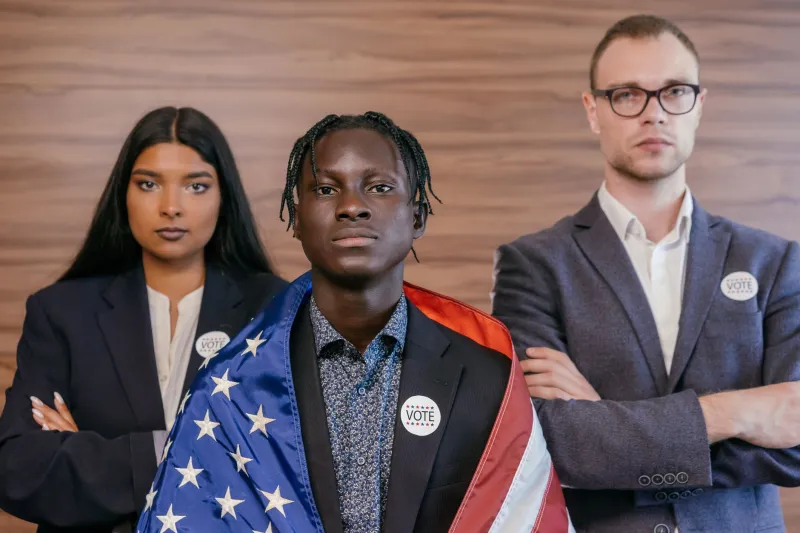
Marcus didn't say a word. He didn't have to. The moment his uncle brought up the border at Thanksgiving dinner in Phoenix last November, Marcus's upper lip pulled back just slightly — a ghost of a sneer, gone before the gravy had finished being passed. He caught it himself, or thought he did. His sister, sitting across the table, saw it too. Nobody mentioned it. Nobody needed to.
That invisible exchange — the one that happens in the space between a breath and a sentence — is increasingly what researchers believe is the most honest political conversation happening in America right now. Not the cable news shoutfests. Not the social media pile-ons. The face. Specifically, the parts of it you can't control.
The Anatomy of a Tell
Microexpressions are involuntary facial movements that flash across a person's face in anywhere from 1/25th to 1/5th of a second. They were first documented extensively by psychologist Paul Ekman in the 1960s and have since become a cornerstone of research into human emotional communication. What makes them particularly fascinating — and socially loaded — is that they're almost impossible to suppress once they've been triggered. You can choose your words. You cannot choose your face.
"There's a lag," explains Dr. Renata Osei, a social psychologist at the University of Michigan who studies political emotion and nonverbal communication. "The cognitive brain takes a beat to catch up with the emotional brain. In that gap, you're completely exposed. And in politically charged conversations, that gap is often where the real opinion lives."
For a lot of Americans navigating an era of intense social sorting, that gap has become a source of genuine anxiety. What if your face says something your community — your family, your coworkers, your congregation — isn't ready to hear?
The Dinner Table as a Laboratory
Tamika, 34, teaches middle school in suburban Atlanta. She describes herself as someone who has "learned to manage her face" over years of sitting through faculty meetings where policies she deeply disagrees with are announced with cheerful certainty. "I've gotten good at neutral," she says. "But there are moments — someone will say something that just hits wrong — and I can feel my face doing something before I've even processed what I'm feeling. It's like my body knows before my brain catches up."
That experience tracks precisely with what the neuroscience suggests. Emotional responses, particularly those tied to threat or moral violation, are processed in the amygdala — fast, pre-verbal, and largely outside conscious control. Political discourse, it turns out, is one of the most reliable triggers for this kind of visceral reaction. Studies have shown that people's physiological responses to political content often contradict their stated positions, particularly when those positions have been adopted for social belonging rather than genuine conviction.
In other words: your face might know something your ideology hasn't caught up to yet.
The Doubts We're Not Allowed to Have
Dr. Osei's research has focused specifically on what she calls "suppressed political ambivalence" — the private doubts that people carry about their own stated beliefs but feel socially prohibited from expressing. Her findings suggest that these doubts are far more common than political polarization data would imply.
"We have this narrative that America is split cleanly down the middle," she says. "But when you actually study people's faces and physiological responses in real time, you find a lot more complexity. People who identify as strong partisans on either side often show microexpressions of discomfort or conflict when their own side's positions are described in extreme terms. The face is catching the nuance that the polling data misses."
For Marcus, the Thanksgiving moment lingered. He'd spent years identifying with a particular political tribe, wearing it like a jersey. But sitting there watching his face betray something — some flicker of complexity he hadn't fully acknowledged — unsettled him. "I realized I'd been performing a certainty I didn't actually have," he says. "And apparently my face knew that before I did."
Reading the Room — or Trying To
Not everyone in the room is equally equipped to catch these signals. Research suggests that people vary widely in their ability to read microexpressions — some individuals are natural "readers," while others miss even obvious emotional cues. But the variance may be less about innate ability and more about practice and context. People who have historically needed to read a room for safety — whether because of race, sexuality, class, or other marginalized identities — tend to be significantly more attuned to nonverbal signals than those who haven't needed that skill to navigate the world.
There's a particular kind of exhaustion that comes with being a highly attuned reader in politically mixed spaces. Priya, 41, an engineer in suburban Dallas, describes family gatherings as "a full-body workout." "I'm tracking everyone's faces constantly," she says. "I can see when something I say lands wrong, even if they're nodding. The face doesn't lie. Which means I'm always aware of exactly how much of myself is welcome in a given room."
That awareness — the ability to sense the gap between a person's stated welcome and their actual comfort — is itself a form of emotional labor that falls disproportionately on those who've always had to be careful.
What Happens When the Face Wins
There are moments, of course, when the face doesn't just flicker — it floods. A jaw that drops. Eyes that fill. A smile that appears involuntarily at entirely the wrong moment. These larger breaks in composure are the ones that tend to go viral, that become the screenshot, the GIF, the talking point. But the smaller tells — the ones that last a fraction of a second — may carry more truth precisely because they aren't performed for an audience.
Dr. Osei believes that paying attention to these signals — in ourselves as much as in others — could be one of the more honest entry points into conversations about where we actually stand. "If your face is consistently doing something different from what you're saying, that's worth sitting with," she says. "Not as an accusation. As information."
Marcus is still processing his Thanksgiving moment. He hasn't changed his voter registration or called his uncle to hash things out. But something shifted. "I think I'd been so focused on having the right opinions that I stopped checking whether they were actually mine," he says. "My face called me out. Which is embarrassing. But also kind of useful."
Every face holds a story worth telling. Sometimes the most important chapter is the one that's over before anyone realizes it started.