Double Life, Single Face: The Hidden Worlds People Carry to Work Every Morning
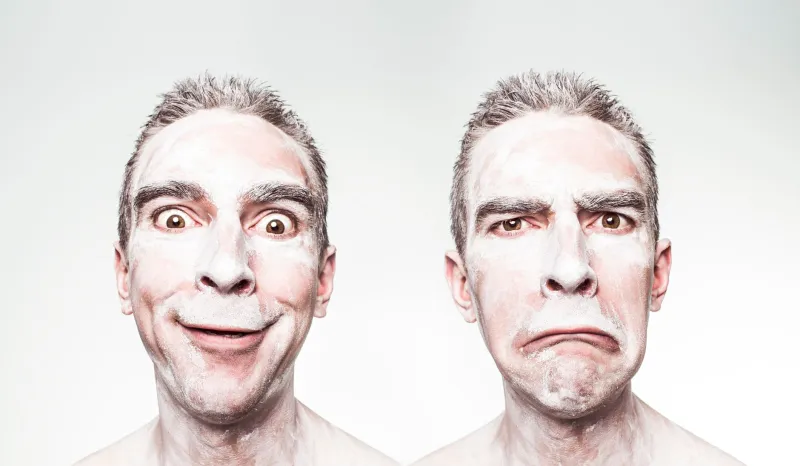
Look closely enough at almost anyone and you'll start to notice something. A callus in the wrong place. A smudge of paint under a fingernail that didn't quite wash out. Eyes that go somewhere else during the lunch break, somewhere specific, somewhere alive. For millions of Americans, the face they show the world — the one on the badge, the one in the Zoom thumbnail — is only half the story.
We talk a lot about authenticity. About bringing your whole self to work, about visibility, about being seen. But what about the people who can't bring their whole self anywhere, not because they're ashamed, but because the world doesn't have a clean box for who they actually are?
The Teacher Who Disappears at Night
Marcellus has been a high school English teacher in Columbus, Ohio for eleven years. His students know him as the guy who makes The Great Gatsby feel relevant, who remembers every kid's name on the first day. What they don't know — what most of his colleagues don't know — is that between 10 p.m. and 2 a.m., he paints.
Not casually. Not as a hobby. He sells his work through an anonymous Instagram account with nearly 40,000 followers. Galleries in Chicago and Atlanta have shown his pieces. He's been written up in regional art publications under a pseudonym he won't share here.
"Teaching is who I am," he says, sitting at his kitchen table surrounded by canvases he'll carefully cover before his partner wakes up. "But so is this. And I don't know how to explain to a room full of sixteen-year-olds that their teacher is also a person with a whole other life pulling at him."
The invisibility isn't accidental. It's protective. He worries about being taken less seriously as an educator if people know he moonlights as an artist. He worries about the reverse too — that the art world won't respect work made by someone who spends his days teaching grammar and grading papers. So he keeps the two selves carefully separated, like watercolors that would bleed into each other if they touched.
What the Body Gives Away
There's a whole language written on people's faces and bodies that most of us skim past without reading. The corporate attorney who walks into the office Monday morning with a gait that's a little too loose, a little too practiced — she spent Sunday performing a two-hour drag set at a bar in Midtown Atlanta under the name Duchess Vermillion.
Her name is Sofia, and she's been doing this for six years. Her firm doesn't know. Her parents don't know. A few close friends do, and they've learned to read the Monday version of her — the one with slightly more confidence in her shoulders, a brightness behind her eyes that the fluorescent office lighting can't quite flatten.
"Drag taught me how to hold a room," she says. "My closing arguments got better after I started performing. I don't think that's a coincidence."
But she keeps the worlds apart, mostly out of exhaustion. "I don't want to spend my energy managing other people's surprise," she says. "I'd rather just do both things well."
This is something researchers who study identity and labor have started paying closer attention to — the way maintaining a hidden professional life requires its own form of emotional work. You're not just doing two jobs. You're managing two versions of yourself, constantly translating between them, constantly deciding what to reveal and what to tuck back in.
When Survival Looks Like a Secret
Not every hidden job is a passion project. For plenty of Americans, the second life is less about art and more about arithmetic.
Renata is a mother of three in the Inland Empire area of Southern California. During the day, she works part-time at a medical billing office. On evenings and weekends, she cleans houses — cash only, no paper trail, because she's navigating an immigration status that makes formal employment a complicated risk. Her kids know she works a lot. They don't know the specifics.
"My face at work," she says, touching her own cheek almost unconsciously, "it's just a face. Nobody asks what else I do. They don't want to know, and honestly, I don't want them to."
There's a particular kind of exhaustion that comes with this kind of invisibility — the kind that isn't burnout exactly, but more like the slow weight of carrying something no one else can help you hold. Renata's story isn't unusual. The Economic Policy Institute estimates that millions of American workers participate in informal labor markets, often out of necessity rather than choice. The faces in the checkout line, the waiting room, the PTA meeting — they're holding more than they're showing.
The Collision
What happens when the two worlds finally find each other?
For Marcellus, it happened at a parent-teacher conference. A student's mother recognized one of his pieces — she'd bought a print from his anonymous account two years earlier. She stared at him. He stared at her. Neither of them said anything.
"She emailed me the next day," he says, smiling in a way that's still a little raw. "She just said, 'I love your work.' That was it. And I sat with that email for like a week before I could respond."
For Sofia, the collision came when a junior associate at her firm showed up at the bar on a Saturday night with a group of friends. She was mid-performance. He recognized her. She finished the set. He gave her a standing ovation.
"He never said anything at work," she says. "But every time I walk into the conference room now, he gives me this little nod. Like he knows the whole picture. Honestly? It's kind of a relief."
Faces as Archives
What Faces of Yve is really about — at its core — is the idea that a face is never just a face. It's an archive. It holds what a person has done, what they're still doing, what they haven't figured out how to say yet.
The invisible uniform isn't a costume. It's the skin people grow to survive in spaces that only want one version of them. And the remarkable thing isn't that so many people wear it. It's that, if you look carefully enough, you can almost always see the seams.
The paint under the fingernail. The Monday morning looseness in the shoulders. The woman who touches her own cheek like she's checking to see if the face she's wearing still fits.
Every single one of those details is a door. Most of us just don't know to knock.