Worn With Purpose: How Americans Are Turning Medical Scars Into Declarations of Self
There's a specific kind of pressure that follows a person out of the hospital. It's not the pain — that, at least, has a name. It's the unspoken expectation that once the wound closes, you should want to close the conversation around it too. Cover up. Move on. Look as "normal" as possible, as fast as possible.
A growing number of people across the country are refusing that deal.
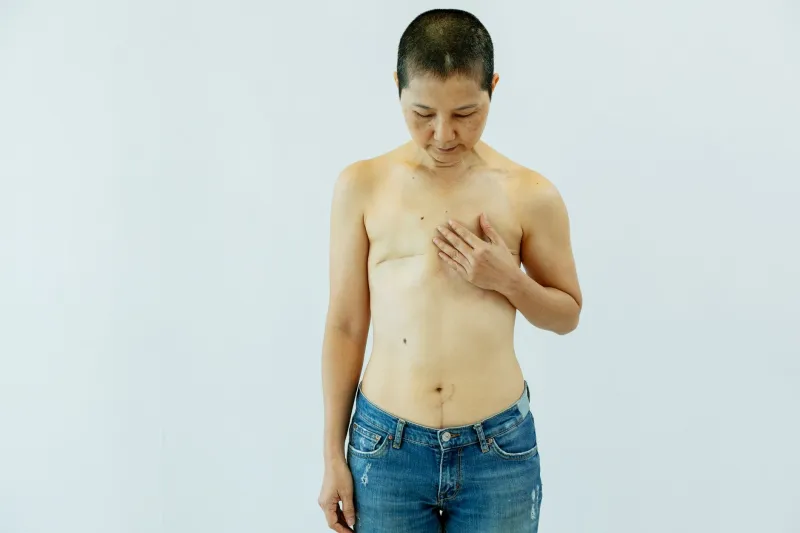
They're posting bare-chested photos after double mastectomies. They're wearing sleeveless shirts over burn-recovery skin that still pulls and shines under sunlight. They're letting the long, deliberate lines of spinal surgeries show in swimwear, on stages, in professional headshots. Not because they're trying to make a statement — though they often do — but because they've decided that their bodies, exactly as they are, belong to them.
The Body After Medicine
American culture has a complicated relationship with medical bodies. We celebrate survival stories, sure. We love a good "she beat cancer" headline. But somewhere between the diagnosis and the triumphant ending, the actual physical evidence of what someone went through tends to get quietly edited out. The scar. The asymmetry. The skin that no longer looks the way it once did.
That editing isn't accidental. It reflects a deeper discomfort — a sense that visible medical history is somehow too much, too raw, too intimate for public consumption.
But people like Dani Torres, a 38-year-old from Phoenix who underwent a bilateral mastectomy after a BRCA-positive diagnosis, are pushing back on that logic in deeply personal ways. Dani didn't go flat with the intention of becoming visible. She just stopped wanting to hide.
"I spent about six months trying to figure out how to dress so nobody would notice," she says. "And then one day I just... didn't. And it felt like putting something down I hadn't realized I was carrying."
Her Instagram following grew not because she marketed herself as an activist, but because people recognized something in her photos they hadn't seen before: a woman living her life, visibly, in a body that medicine had touched.
It's Not About Bravery — Or At Least, Not Just That
One of the things people who reclaim their medical marks push back on most is the language of heroism. Being called "brave" for existing in your own skin can feel like another form of othering — a way of marking the body as exceptional when the person wearing it just wants to feel ordinary.
Marcus Webb, 45, was in a house fire in rural Georgia when he was nineteen. The burns that covered his neck, shoulder, and right arm took years and multiple surgeries to treat. For most of his twenties, he wore high collars and long sleeves regardless of the season.
"People mean well when they say brave," he says. "But brave implies I'm doing something hard every day. Some days I'm just getting coffee."
What changed for Marcus wasn't a single moment of revelation. It was accumulation — years of therapy, a partner who didn't flinch, a community of other burn survivors online who treated their recovery skin with casual familiarity rather than reverence. Eventually, the effort of covering up started to feel more exhausting than the discomfort of being seen.
Now he coaches youth basketball in short sleeves. He didn't announce it. He just showed up.
When the Scar Becomes the Story
For some people, the decision to be visible with their medical history is tied directly to advocacy — a deliberate choice to shift what others see as possible.
Lena Park, a 29-year-old Korean American woman in Chicago, had open-heart surgery for a congenital defect when she was seven. The vertical scar running down her sternum has been part of her body for as long as she can remember. But it took until her mid-twenties — and a particular moment at a pool party where a stranger asked if she'd been "in an accident" — for her to decide she wanted to control her own narrative around it.
She started a small blog, then a podcast, focused specifically on Asian American women navigating chronic illness and visible medical difference. The response was immediate and overwhelming.
"There's this extra layer when you're a woman of color with a visible medical history," she explains. "You're already navigating so many assumptions about your body. Adding a scar into that mix can feel like one more thing you have to explain or defend. I wanted to create a space where nobody had to do that."
Her platform now reaches tens of thousands of listeners. But she's clear that visibility, for her, was never just personal growth. It was political.
What Changes When We Look
There's real cultural weight to what happens when medical bodies become visible in everyday American life — not in hospital dramas or awareness campaigns, but just out in the world, unremarkable and unhidden.
It challenges the idea that healed means erased. It expands what bodies are allowed to look like in spaces that have historically been pretty narrow about that. And it creates permission — quiet, powerful permission — for other people carrying similar histories to take up a little more space.
None of this requires anyone to be public. Visibility is a choice, and the choice to keep your story private is just as valid as the choice to share it. What matters is that the choice feels like yours — not something extracted by shame or social expectation.
That's the thread running through every conversation with people who've made peace with their medical marks: not that they decided their scars were beautiful (though some have), but that they decided their scars were theirs.
The Face Behind the Scar
At Faces of Yve, we talk a lot about the stories that live in a face — in the lines, the expressions, the features that carry history. But stories live in the whole body. In the places where medicine intervened and life continued anyway. In the skin that healed differently, that tells a different kind of time.
The people choosing to let those marks show aren't asking to be celebrated. Most of them are just asking to be seen — not despite what happened to their bodies, but including it.
That's not a small thing. In a culture that still flinches at visible vulnerability, choosing to be fully present in a body that's been through something is its own quiet form of revolution.
And it looks different on everyone. That's kind of the point.