Mirror, Meet Stranger: The Long Journey Back to Your Own Face
The first thing Denise noticed was the nose. Not because it was dramatically different — the reconstructive surgery after her car accident had been, by her surgeon's assessment, a success — but because the nose she'd grown up with had a slight leftward lean that she'd hated as a teenager and quietly made peace with as an adult. The new nose was straighter. Objectively better, probably. And completely unfamiliar.
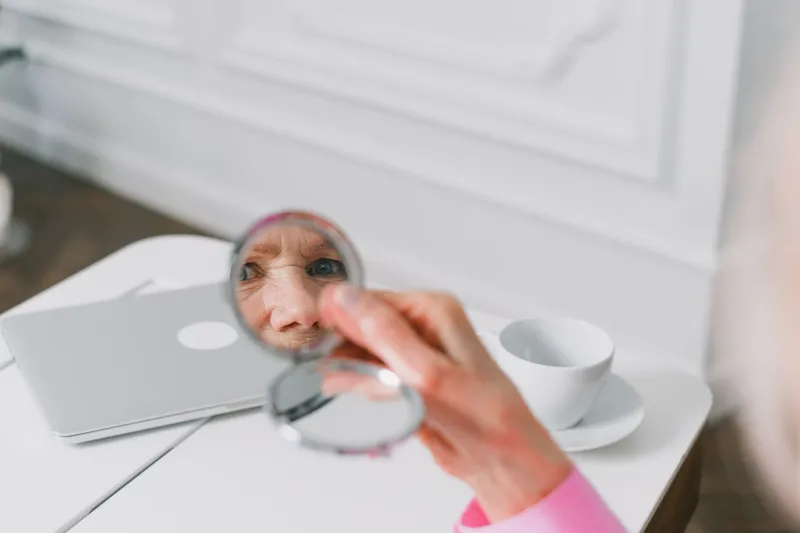
"I'd stand in the bathroom for twenty minutes just looking," she says. "Not in a vain way. More like... I was trying to figure out who I was talking to."
Denise is 47 and lives in Columbus, Ohio. She spent the better part of two years after her 2021 accident navigating what therapists sometimes call "facial identity disruption" — a concept that sounds clinical until you're the one living it, standing in a gas station bathroom and genuinely startled by your own reflection.
The Face We Think We Have
Most of us carry an internal image of our face that is, by definition, outdated. We form our primary sense of our own appearance in adolescence and early adulthood, and that image tends to anchor itself with surprising stubbornness. We update it gradually, imperfectly — catching a glimpse in a shop window, seeing ourselves tagged in a photo we didn't expect. But the core sense of what our face is remains relatively stable across decades.
When something disrupts that — suddenly, surgically, or through the slower accumulation of age — the psychological impact can be profound and deeply underreported.
"We talk a lot about body image in this culture, but we tend to focus on weight and fitness," says Dr. Jonah Reyes, a clinical psychologist in Los Angeles who works with patients undergoing significant appearance changes. "Facial change is a different category. The face is how we're recognized. It's how we recognize ourselves. When it shifts significantly, people often describe a kind of grief that's hard to name because there's no culturally acknowledged script for it."
What Grief Looks Like When There's No Funeral
Ray, 55, lost significant muscle function on the left side of his face following Bell's palsy that progressed more severely than his doctors anticipated. The asymmetry, he says, is something he notices in every conversation — not because others stare, but because he's hyperaware of how his face moves now, or doesn't. "I used to be a pretty expressive person," he says. "I'd raise an eyebrow, smirk at something — my face did a lot of talking. Now I feel like half of it is... on mute."
The loss Ray describes isn't just aesthetic. It's communicative. The face is an instrument, and when that instrument changes, the music changes with it. People around him respond differently — sometimes reading his neutral expression as coldness, or missing the humor in something he's said because the wink he'd have given is no longer reliably available. "I've had to learn to use words for things my face used to do automatically," he says. "Which is exhausting in a way I never expected."
For others, the disruption runs in a different direction — the change is something they chose, and the complexity lies in the gap between what they wanted and what they feel. Sandra, 61, underwent a facelift in her late fifties after years of feeling invisible in her industry. "I wanted to look like myself again," she says. "Like I looked when I felt most like me." What she got was something adjacent to that — younger, yes, but also unfamiliar in ways she struggles to articulate. "I don't regret it. But I also didn't expect to spend so much time mourning a face that I'd been trying to get rid of."
The Mirror as a Practice
Dr. Reyes uses an exercise with his patients that he calls "slow mirroring" — a structured practice of spending time with the reflection without judgment, not trying to reconcile the new face with the old one but simply observing it as its own thing. "The goal isn't acceptance in the sense of resignation," he explains. "It's more like introducing yourself to someone. You wouldn't walk up to a stranger and immediately compare them unfavorably to someone you used to know. We're trying to extend that same basic courtesy to the self."
For Denise, the shift came unexpectedly, through a photograph. About eighteen months after her accident, a friend sent her a candid shot from a backyard cookout — Denise mid-laugh, head thrown back, eyes nearly closed. "I looked at it and thought, oh, that's me," she says. "Not the me before the accident. Just... me. And something clicked."
That moment of recognition — finding yourself in an unguarded expression rather than a deliberate examination — is something multiple people in this space describe. The face, it turns out, reveals itself most fully not in stillness but in motion, in laughter, in the unselfconscious moments when you've stopped trying to locate yourself and simply are.
Aging as Its Own Rearrangement
Not every significant facial change comes from a single dramatic event. For millions of Americans, the process is slower — the gradual accumulation of years that one day tips from "I look tired" to "I don't quite recognize myself."
Lorraine, 68, describes watching her mother's face in her own reflection over the past decade. "She had these deep lines around her mouth when she smiled, and I used to think I'd never look like that," she says. "And then one day I did. Which was actually kind of beautiful, once I stopped fighting it. I looked like someone I loved."
That reframe — from loss to lineage, from stranger to ancestor — is one that therapists working in this space often describe as a turning point. The face doesn't have to be the face you had. It can be the face you're becoming. And that becoming, however disorienting, is its own kind of story.
Every face holds a story worth telling. For some of us, the most important chapter is the one that starts the moment we stop recognizing ourselves — and begin, slowly, to look again.